You Can't Scare Me I Have Crazy Bestie Embroidery Review
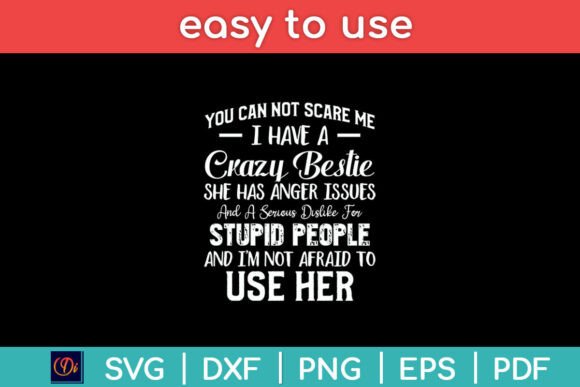
When I download a digital embroidery file, my first question is always: what’s the real-life embroidery project this design wants to live on? Let’s look at You Can't Scare Me I Have Crazy Bestie from that perspective. As a graphics file in the Crafts category, it’s a raw asset. My job as a designer is to judge its potential for actual stitching, for client projects, and for my small shop merchandise.
The Mood and First Impression of This Design
The title and the vintage, playful style of You Can't Scare Me I Have Crazy Bestie immediately sets a tone. It’s lighthearted, loyal, and a bit mischievous. The humor is built around friendship and a specific profession—the nod to CNA nursing adds a layer of personalization. The visual personality feels warm and conversational, not aggressive or overly slapstick. That’s a crucial distinction for gift items; it’s funny without being mean. In my mind, I can already see this on a soft, cozy background—it’s not a design meant for stark, minimalist applications.
Where This Embroidery Design Naturally Belongs
I’m thinking through my current project queue. A client recently asked for a custom embroidered tote bag for her best friend, a nurse graduating from her CNA program. This design could be a perfect core element. But it’s not limited to that. The “crazy bestie” theme is universal. Beyond tote bags, You Can't Scare Me I Have Crazy Bestie has a natural fit on:
- Soft, relaxed apparel like sweatshirts and t-shirts for a personal gift.
- Aprons or kitchen towels for a duo who love cooking together.
- Pillow covers for a dorm room or a fun bedroom accent.
- Baby items like a blanket for a mom who’s a nurse, turning it into a cute, sentimental piece.
- As an embroidered patch, it could be applied to caps, jackets, or backpacks.
- For my craft business, it could be a staple on simple tea towels or pillow covers sold at a holiday craft fair.
The design feels like it belongs on items meant for closeness, comfort, or lighthearted daily use.
Performance in Real Embroidery Situations
How will You Can't Scare Me I Have Crazy Bestie actually look after stitching? The vintage style suggests it might use script or decorative lettering. In embroidery, that means paying close attention to stitch clarity. On a mid-weight cotton tote bag, with proper stabilizer, the fill stitches in the letters should look clean and full. On a stretchy fabric like a sweatshirt, I’d need to be extra cautious with stabilizer choice to prevent puckering around any dense satin stitch areas.
For visual appeal on finished products, the humor increases giftability. A customer sees it and instantly thinks of a specific person—that’s powerful for handmade presentation. It adds a story to the product. For an Etsy seller or a boutique, that story can drive engagement. It’s not a generic graphic; it sparks recognition and personal connection, which boosts perceived value.
Caution Zones and Careful Application
Every design has its tricky spots. With You Can't Scare Me I Have Crazy Bestie, my practical notes for embroidery would focus on scale and detail.
- Small hoop sizes could be problematic if the design has tiny lettering or intricate decorative accents. Shrinking it too much might make the text unreadable.
- Textured or dark fabrics require careful thread color contrast. A light thread on a dark denim cap needs to be vibrant to pop.
- Curved surfaces like caps demand testing; the layout must adapt to the curve without distorting the message.
- If the design includes dense stitch areas, on thin fabric like a baby t-shirt, you risk a stiff, uncomfortable finish.
- For products needing frequent washing, like aprons or kitchen towels, a robust stitch density and quality thread are non-negotiable for longevity.
These aren’t flaws of the design; they’re just the realities of translating a graphic into a tactile, stitched product.
Practical Designer Notes Before You Stitch
Before I load this file into my machine for a client’s tote bag, my process is always the same.
- Test on scrap fabric first. Use the same material you intend for the final project. Check stitch density, thread tension, and how small details like the “CNA” reference render.
- Review thread color contrast. Run a simple black and white mockup in your software to see the silhouette. Then test on both light and dark fabric backgrounds physically.
- Confirm your hoop size. Ensure the design dimensions fit comfortably within your planned hoop, leaving room for stabilizer.
- Inspect the small details. Look at any corners, serifs in letters, or potential jump stitch areas that might need manual attention.
- Use proper stabilizer. Match it to your fabric weight and stretch. This is the unsung hero of professional-looking embroidery.
- Confirm licensing. As a digital embroidery file, understanding whether it’s for personal use, commercial projects, or both is essential before selling finished items or using it in your craft business assets.
Following these steps turns a digital asset into a reliable, high-quality finished product that builds customer trust and brand consistency.
The Final Verdict for Makers and Entrepreneurs
You Can't Scare Me I Have Crazy Bestie is a design with a clear, warm-hearted purpose. It’s not just a graphic; it’s a conversation starter waiting to be stitched. For embroidery designers and small business owners, it offers a niche appeal—perfect for personalized gifts within the nursing community and a broader, universal friendship theme. Its value lies in that specificity paired with humor.
In practical embroidery work, success will come from treating it with the respect any good design deserves: testing, matching it to the right fabric and product type, and ensuring your execution is clean. When done right, it elevates a simple tote bag, sweatshirt, or pillow into a meaningful, giftable piece. That’s the magic we look for in digital design assets—the potential to create real connection through our craft.