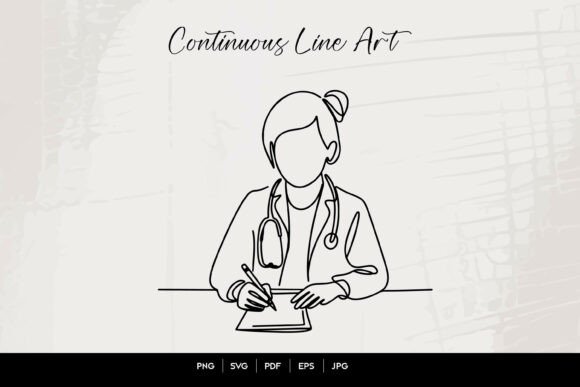
Doctor Writing Notes: A Versatile Line Art Design
As an experienced designer and embroidery product reviewer, I recently had the chance to evaluate the Doctor Writing Notes Line Art Illustration. This design, available in SVG, PNG, EPS, PDF, and JPG formats, is a promising addition for those looking to add a touch of medical elegance to their embroidery projects.
First Impressions and Visual Personality
The first thing that strikes me about this line art is its clean, continuous lines. The illustration depicts a female doctor writing notes, with a stethoscope around her neck, creating a serene and professional mood. The simplicity of the design makes it highly versatile, suitable for a wide range of embroidery projects, from custom apparel to personalized gifts.
Real-Life Embroidery Projects: Where It Shines
Imagine using this design on a custom embroidered tote bag or a sweatshirt. The minimalist style of the Doctor Writing Notes Line Art Illustration would look particularly striking on these items, adding a sophisticated and modern touch. For baby clothes, such as onesies or bibs, the design could be resized to fit smaller spaces, making it a perfect choice for a future doctor's nursery decor.
- Tote Bags: The design's clean lines and simple theme make it ideal for a large, flat surface like a tote bag.
- Sweatshirts and T-Shirts: The professional yet approachable feel of the design would complement casual wear, making it a great choice for both personal and commercial use.
- Baby Clothes and Nursery Decor: Resizing the design to a smaller scale would work well for baby items, adding a touch of inspiration and aspiration.
Practical Considerations for Embroidery
When considering the Doctor Writing Notes Line Art Illustration for real embroidery projects, there are a few practical aspects to keep in mind. The design's simplicity means it can handle a variety of stitch types, such as satin stitch, fill stitch, and running stitch, but it's always wise to test the design on scrap fabric first. This will help you check the thread color contrast and stitch density, ensuring the final product looks polished and professional.
- Test on Scrap Fabric: Before committing to your final project, test the design on a similar fabric to ensure the stitching looks clear and clean.
- Thread Color Contrast: Choose thread colors that provide good contrast against the fabric, especially if using dark or textured materials.
- Stitch Density: Adjust the stitch density to suit the fabric type and the size of the design. This is crucial for maintaining the design's clarity and preventing puckering.
Where to Use Caution
While the Doctor Writing Notes Line Art Illustration is generally versatile, there are some areas where extra care is needed. For instance, when using the design on small hoop sizes, textured fabrics, or stretchy materials, the fine details might not translate as well. Additionally, curved surfaces like caps may require adjustments to ensure the design lays flat and maintains its integrity.
- Small Hoop Sizes: The design's details may get lost in smaller hoops, so consider resizing or simplifying the design for these applications.
- Textured and Stretchy Fabrics: These materials can affect the clarity of the design, so use a stabilizer and adjust the stitch settings accordingly.
- Curved Surfaces: When embroidering on caps or other curved surfaces, take extra care to ensure the design fits well and doesn't distort.
Enhancing Visual Appeal and Product Value
The Doctor Writing Notes Line Art Illustration has the potential to significantly enhance the visual appeal and value of your handmade products. Whether you're creating a custom embroidered patch, a boutique product, or a holiday gift, the design's professional and elegant look can add a touch of sophistication. This, in turn, can boost customer trust and engagement, making it a valuable asset for your craft business or Etsy shop.
Final Thoughts and Practical Tips
In conclusion, the Doctor Writing Notes Line Art Illustration is a well-crafted and versatile design that can be a valuable addition to any embroidery project. To make the most of this design, remember to test it on scrap fabric, check the thread color contrast, and review the stitch density. Always confirm the hoop size and inspect small details to ensure the best possible outcome. With these tips in mind, you'll be well on your way to creating high-quality, visually appealing, and professional-looking embroidered products.