A Designer's Take on the OB Nurse Era Embroidery File
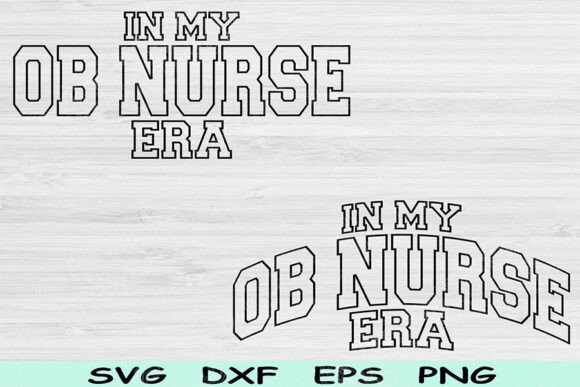
When a new digital embroidery file lands in my library, I don't just look at the screen. I imagine it stitched out. I think about the fabric, the thread, and the person who will eventually wear or use the finished product. That’s exactly the process I went through with the In My OB Nurse Era SVG DXF PNG cut files. As someone who regularly creates custom apparel and personalized gifts for clients, a design like this isn’t just a graphic; it’s a potential project waiting for its perfect application.
The Immediate Mood & Visual Personality
The first thing that strikes you is the phrase itself. "In My OB Nurse Era" has a current, relatable, and proudly professional vibe. It’s celebratory and personal. For embroidery, this means the design’s success hinges on clarity and clean execution. The words are the star, so the layout and detail level need to support that. From a designer’s perspective, this isn’t an overly complex graphic, which is often a strength. It promises good stitching clarity, provided the file paths are clean and the lettering isn’t too delicate.
The Natural Project Fit
This design feels destined for wearables and gifts with a personal touch. It naturally belongs on items meant for recognition, celebration, or daily use. My mind immediately goes to a custom embroidered sweatshirt for a nurse after a long shift, a tote bag for carrying gear to the unit, or a thoughtfully embroidered pillow cover as a gift from a grateful family. It has that blend of professionalism and personal identity that makes for great handmade products.
Performance in Real-Life Embroidery Situations
Let’s talk application. I envisioned stitching this out for a recent client request: a set of custom tote bags for a nurse’s retirement party. The In My OB Nurse Era design would be a cornerstone piece. On a sturdy canvas tote, using a satin stitch for the letters could look crisp and luxurious, increasing the perceived value of the gift. On a soft cotton sweatshirt, a fill stitch approach might feel more integrated and comfortable.
For baby clothes or nursery decor, perhaps for an OB nurse’s own new arrival, scaling it down and using a simpler running stitch could make it sweet and subtle. As an embroidered patch, it could become a versatile badge of honor, easily applied to caps or aprons. The design’s strength in these varied scenarios lies in its thematic resonance rather than intricate detail, making it adaptable.
Where to Exercise Caution
Any embroidery designer knows that adaptation requires caution. With a phrase-focused design like this, small hoop sizes could compress the lettering, risking clarity. On highly textured fabrics like some blankets, or stretchy fabrics like certain t-shirts, the text could distort without proper stabilizer. Dark fabric backgrounds demand high contrast thread color choices to keep the message readable.
Applying it to curved surfaces, like the front of a cap, requires careful digitizing to ensure the text doesn’t warp. The corners and ends of letters are critical points—they need to be clean in the file to avoid bulky, dense stitch areas that can pucker or feel stiff. For products that need frequent washing, like kitchen towels or everyday apparel, a less dense stitch approach will enhance durability.
Impact on Appeal, Value, and Engagement
From a business standpoint, whether you’re an Etsy seller, a small shop owner, or a hobbyist making gifts, this design affects several key areas. Its visual appeal is direct and emotional, which can drive customer engagement. Stitching clarity translates directly to customer trust; a clean, professional embroidered finish makes a handmade product feel deliberate and high-quality.
For brand consistency, if you’re a creative entrepreneur specializing in healthcare appreciation products, this file is a solid asset. Its giftability is high—it’s specific, meaningful, and feels custom-made. The recognition factor is instant, which helps in commercial embroidery projects for hospital gift shops or boutique merchandise. It simply looks like a thoughtful, finished product when executed well.
Practical Designer Notes for Your Project
Before you commit this to a final project, do the groundwork. Always test the embroidery file on a scrap of your intended fabric first. Check thread color contrast against both light and dark backgrounds—maybe even stitch a small sample in black and white to judge form. Review the stitch density in your software; is it appropriate for your fabric weight?
Confirm your hoop size can accommodate the design without forcing unwanted scaling. Inspect the small details in the provided files. Since the product description mentions multiple formats, ensure you’re using the one best suited for your machine or technique. Use proper stabilizer; it’s the unsung hero of clean text embroidery.
Crucially, always check the licensing terms provided with the digital artwork files. Confirm whether they allow for personal use, commercial projects, or the sale of finished items. This step is non-negotiable for craft businesses and digital product sellers.
Final Thoughts on the Craft
The In My OB Nurse Era SVG DXF PNG cut files present a straightforward, thematically powerful opportunity for embroidery designers and makers. It’s a graphic that serves the craft well by being conceptually strong rather than technically fussy. It invites you to think about the recipient, the occasion, and the best fabric to carry its message. In the world of custom apparel and personalized gifts, that thoughtful connection between design and use is what turns a digital file into a cherished, embroidered reality.