Blood Pressure Monitor Line Art: A Minimalist Embroidered Icon
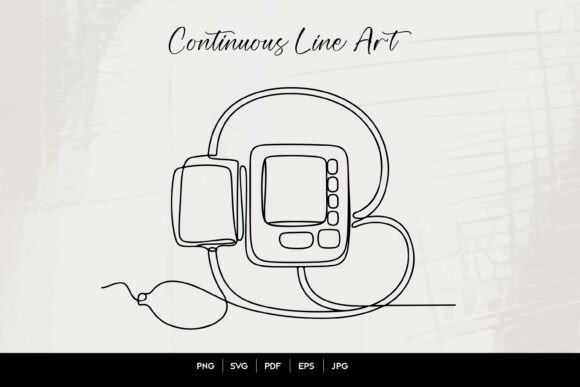
When a new embroidery design file lands on my desktop, I open it with a specific mindset: how will this translate from a digital preview into actual thread on actual fabric? It’s the practical bridge between a graphic and a tangible product that matters. Today, I’m looking at the Blood Pressure Monitor Line Art Illustra. It’s a continuous line drawing of a sphygmomanometer—that classic medical device. This isn’t a complex, shaded illustration; it’s a clean, minimalist line art graphic. The immediate impression is one of precise, understated professionalism. It feels calm, authoritative, and quietly educational.
The Immediate Appeal & Where It Naturally Belongs
The single-line style gives it a modern, almost schematic quality. It avoids the cluttered feel of a more detailed medical diagram. This simplicity is its biggest strength for embroidery. The continuous line means the design is essentially one path, which translates beautifully into a running stitch or a clean satin stitch outline. In my mind, I’m already picturing it on a canvas tote bag for a nursing student, or as a subtle emblem on the sleeve of a healthcare worker’s sweatshirt. It wouldn’t overpower the garment; it would serve as a badge of identity.
This design naturally belongs to projects that require a touch of quiet recognition. Think beyond the obvious medical field. It could be a thoughtful gift for a doctor retiring, embroidered on a pillow cover or a kitchen towel for their home. For a small shop specializing in boutique baby items for nurses or doctors, this could be a beautiful, minimalist addition to a baby blanket or a nursery decor piece. The theme is specific, but the execution is so elegant that it elevates the item from a simple gift to a personalized keepsake.
Real-Life Embroidery Scenario: A Custom Nurse’s Tote
Let’s walk through a real case. I’m considering this for a custom embroidered tote bag order from a group of nurse practitioners. They want something professional, useful, and symbolic. The tote’s fabric is a sturdy cotton canvas. The Blood Pressure Monitor Line Art design, being line-based, won’t require heavy fill stitches, which is perfect for a bag that will bear weight and frequent use. High stitch density on a tote can lead to stiffness and potential wear points. Here, the outline approach maintains fabric flexibility.
I’d likely opt for a deep navy or charcoal thread on a light natural canvas. The continuous line would stitch out clearly, creating a sharp, graphic logo. The design’s clarity directly impacts perceived product value. On a handmade item, a clean, recognizable stitch result builds customer trust—it looks intentional and professional, not messy or ambiguous. For an Etsy seller or a craft fair vendor, this quality of execution in the finished product directly boosts buyer engagement and brand consistency.
Performance Across Different Projects & Fabrics
This design’s adaptability is interesting. On a baby onesie for a pediatrician’s newborn, scaled down, the single line should remain discernible if the embroidery file is well-digitized and the smallest details aren’t too tiny. On a cap, the curved surface is a challenge for any design, but a simple outline like this, placed on the curved side panel, would likely fare better than a dense, filled graphic.
However, this is where careful consideration is key. Where should this design be used carefully? On very textured fabrics like thick wool or fleece, a single running stitch line might get lost in the texture. On dark fabrics, the thread color contrast must be high—a bright white or silver thread would be essential to maintain the graphic’s clarity. The “continuous line” concept means there are likely no isolated tiny internal details, but corners where the line turns sharply—like at the gauge dial—need to be checked in the actual embroidery file to ensure the stitches don’t bunch up.
For commercial embroidery projects, such as批量生产 patches for a medical conference, this minimalist style is excellent. It stitches quickly due to lower stitch counts (assuming the file is optimized), and it’s easily recognizable even at smaller sizes. It’s a strong candidate for an embroidered patch applied to aprons or lab coats.
Affecting Appeal & Practical Designer Notes
Using this design affects visual appeal by leaning on symbolism rather than ornamentation. The stitched result won’t be “flashy,” but it will be meaningful. That makes it highly “giftable.” For craft businesses, it allows you to target a niche audience—healthcare professionals, medical students, science enthusiasts—with a product that feels custom-made for them.
Now, for the practical notes I’d follow before loading this into my machine:
- Test on scrap fabric first. Use the same fabric and stabilizer combination as your final project. See how the continuous line renders. Does it look clean? Are there any jump stitches that need trimming?
- Check thread color contrast. Run a mental (or actual) mockup on both light and dark background fabrics. The design’s impact hinges on this contrast.
- Review the embroidery file in your software. Look at the stitch sequence. Confirm the hoop size required fits your project. Inspect the small details like the dial face and the tubing connections for potential stitch issues.
- Stabilizer is non-negotiable. Even for a line design, proper stabilizer ensures the lines don’t distort, especially on stretchy fabrics like t-shirts or sweatshirts.
- Consider its use. The product description lists multiple file formats (SVG, PNG, EPS, PDF, JPG), which is great for digital product sellers creating printable mockups or using it in design assets. However, as an embroidery designer, the crucial file is the specific machine embroidery design format you need. That detail isn’t listed here, so it’s paramount to confirm you have the correct embroidery file type for your machine before proceeding.
- Confirm licensing. Before selling finished tote bags, patches, or apparel, or before including the design in your own digital product bundles, explicitly confirm the licensing terms for commercial use. This is a fundamental step for any creative entrepreneur.
A Design for Purposeful Crafting
The Blood Pressure Monitor Line Art Illustra isn’t a generic floral motif. It’s a purposeful graphic. Its value in the Crafts and Graphics space lies in its specificity and its clean execution. For embroidery, it promises a stitching process that is likely straightforward and a final product that carries a clear, professional message. It’s a design I’d use when the project needs a symbol of care, precision, and expertise—stitched into the fabric with the same quiet confidence the image itself portrays.
In the end, my judgment is that this is a strong, niche design for makers targeting a meaningful audience. It won’t be for every project, but for the right one—a custom gift for a nurse, branded merchandise for a clinic, or a learning tool for a student—it will stitch out exactly as intended: a minimalist, recognizable icon, adding value through its simple, eloquent line.